

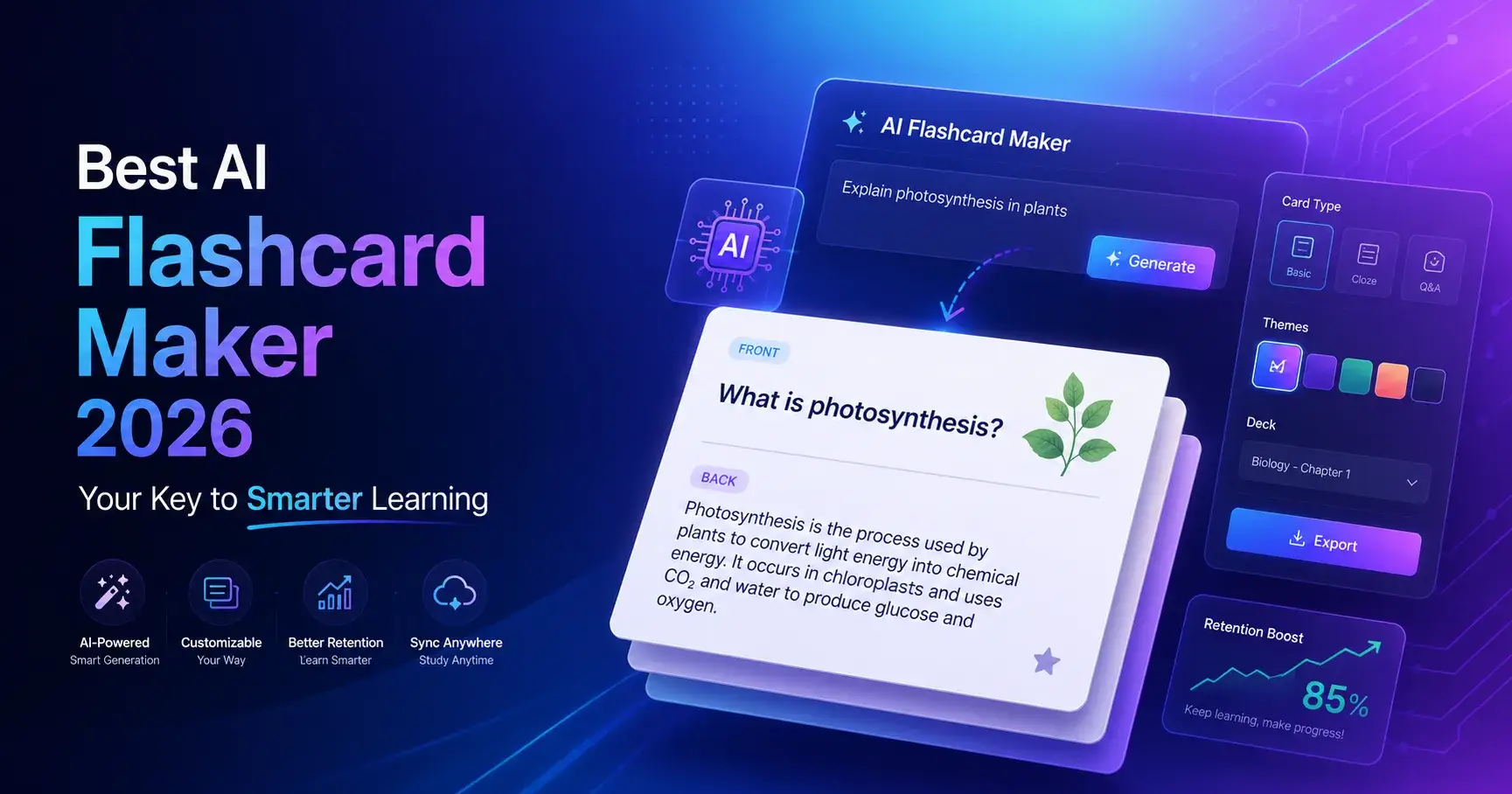
Education is entering a new era defined by intelligent systems, adaptive learning, and data-driven study behavior. At the center of this transformation is the ai flashcard maker, a powerful innovation that is reshaping how students and professionals prepare, memorize, and master complex subjects. By combining artificial intelligence with proven cognitive learning strategies, these systems are redefining academic success through faster learning, better retention, and personalized study experiences.
Statistical insights into modern learning patterns show that learners using structured, AI-supported study methods consistently achieve higher performance levels compared to traditional revision approaches. This shift reflects a growing demand for smarter, more efficient education tools that align with individual learning needs.
Why is AI-driven learning becoming essential in modern education?
AI-driven learning is becoming essential because it adapts to the unique needs of each learner. Traditional education methods often follow a fixed structure, which may not suit all learning speeds or styles.
In contrast, AI systems analyze user behavior and adjust content delivery accordingly. This ensures that learners receive personalized study experiences that focus on their strengths and weaknesses.
Statistically, adaptive learning environments significantly improve retention and comprehension by aligning study patterns with individual cognitive processes.
How do AI flashcard systems improve academic performance?
AI flashcard systems improve academic performance by making learning more efficient and targeted. Instead of reviewing entire subjects repeatedly, learners focus on key concepts that need reinforcement.
These systems use intelligent algorithms to prioritize difficult topics and schedule reviews at optimal intervals. This structured approach reduces unnecessary repetition and enhances learning efficiency.
As a result, learners achieve better understanding and higher recall accuracy in less time.
What role does personalization play in academic success?
Personalization plays a crucial role in academic success because it ensures that learning is tailored to individual performance levels. Every learner has different strengths, weaknesses, and learning speeds.
AI flashcard systems continuously analyze study behavior and adjust content accordingly. This ensures that learners spend more time on challenging areas while reinforcing already mastered concepts efficiently.
Statistical learning models show that personalized study methods lead to significantly better academic outcomes compared to one-size-fits-all approaches.
How does active recall enhance learning efficiency?
Active recall enhances learning efficiency by requiring learners to retrieve information from memory rather than passively reviewing it. This process strengthens neural connections and improves long-term retention.
AI flashcard systems are designed to encourage active recall through repeated questioning and structured response cycles.
Research in cognitive learning shows that active recall significantly improves exam performance and knowledge retention compared to passive study techniques.
Why is spaced repetition important in AI flashcard systems?
Spaced repetition is important because it aligns learning with the brain’s natural memory decay pattern. Instead of reviewing material randomly, learners revisit information at scientifically optimized intervals.
AI systems automate this process by scheduling reviews based on performance data and memory strength. This ensures that information is reinforced at the right time for maximum retention.
Statistical evidence shows that spaced repetition significantly improves long-term memory stability and recall accuracy.
How do AI flashcards simplify complex subjects?
AI flashcards simplify complex subjects by breaking them into smaller, structured learning units. This makes difficult topics easier to understand and remember.
Instead of overwhelming learners with large volumes of information, the system presents concepts step by step. This structured approach improves clarity and reduces cognitive overload.
Over time, learners build a strong foundation that supports deeper understanding of advanced topics.
Can AI flashcard systems improve exam preparation?
Yes, AI flashcard systems significantly improve exam preparation by focusing on weak areas and reinforcing key concepts through structured repetition.
These systems simulate exam-like recall conditions, helping learners improve accuracy and confidence under time constraints.
Data-driven learning trends show that students using structured recall methods perform better in high-pressure exam environments.
How does data analytics improve learning outcomes?
Data analytics improves learning outcomes by providing insights into performance patterns, accuracy levels, and retention rates.
AI systems use this data to adjust study plans and optimize learning strategies. Learners can clearly see their progress and identify areas that need improvement.
This data-driven approach ensures more efficient learning and better academic results over time.
Why is consistency important in AI-based learning systems?
Consistency is important because memory retention improves through repeated exposure over time. Irregular study habits often lead to forgetting and weak understanding.
AI flashcard systems encourage consistency by providing structured study schedules and reminders based on user behavior.
Consistent learning leads to stronger memory retention and improved academic performance.
How do AI flashcards increase student engagement?
AI flashcards increase engagement by making learning interactive and dynamic. Instead of passive reading, learners actively participate in answering and recalling information.
This interaction keeps learners focused and motivated throughout their study sessions. The sense of achievement after each correct response encourages continued learning.
Higher engagement levels directly contribute to improved retention and academic success.
What makes AI flashcards more efficient than traditional study methods?
AI flashcards are more efficient because they eliminate unnecessary repetition and focus only on essential concepts. Traditional methods often involve re-reading entire chapters, which can be time-consuming and less effective.
AI systems streamline learning by prioritizing important topics and adjusting difficulty levels based on performance.
This results in faster learning, better comprehension, and improved retention rates.
How do AI flashcards support long-term knowledge retention?
AI flashcards support long-term retention by reinforcing information through adaptive repetition and structured review cycles.
Learners revisit material at optimized intervals, ensuring that knowledge is consistently refreshed over time.
Statistical learning data shows that structured repetition significantly improves long-term memory stability.
What is the impact of AI flashcards on learning motivation?
AI flashcards positively impact motivation by providing clear progress tracking and measurable improvement indicators.
Learners can see their advancement over time, which builds confidence and encourages continued study.
This positive reinforcement helps maintain long-term motivation and consistent learning habits.
How do AI flashcards handle different learning styles?
AI flashcards support different learning styles by offering flexible formats such as text-based, visual, and structured recall methods.
This adaptability ensures that learners can engage with content in ways that best suit their preferences.
Such flexibility improves comprehension and makes learning more inclusive and effective.
Conclusion
Advanced AI flashcard maker solutions represent a major breakthrough in modern education by combining personalization, automation, and cognitive science principles. These systems significantly improve academic performance, learning efficiency, and long-term retention. As education continues to evolve, AI-driven flashcard technology will remain a key driver of academic success, enabling learners to study smarter, retain more, and achieve better outcomes with greater ease and consistency.